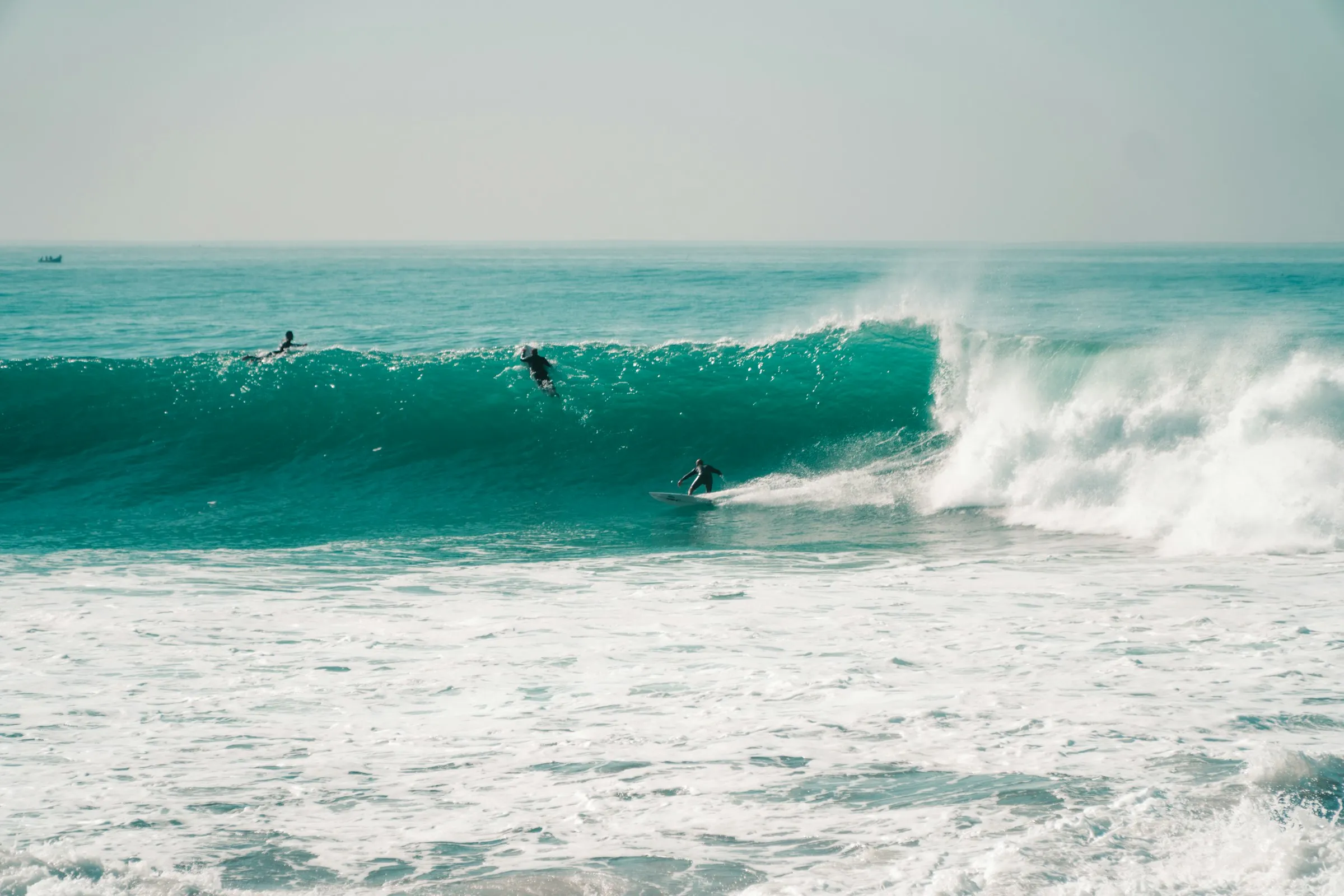
Morocco’s Atlantic coast works year-round, but it does not deliver the same thing every month. Knowing which window matches your level is the difference between a great trip and a frustrating one.
What drives the swell
The waves that reach Morocco are generated by low-pressure systems in the north Atlantic. Those storms track across the ocean during the northern winter and fire swell south-east towards the African coast.
That single fact explains the whole season: more storms means more swell, so the winter half of the year is bigger and more consistent, and the summer half is smaller and gentler.
Month by month
September – October. The season wakes up. Water is still warm from summer, the first proper north-west swells arrive, and crowds have not yet built. Many people consider this the sweet spot.
November. Consistency arrives properly. Swell is regular, the water is still comfortable and the peak-season rush has not started. If you want quality without chaos, this is a strong pick.
December – February. Peak season. The most powerful and most consistent swell of the year, and the busiest line-ups, as European surfers escape winter. Expect solid days at every point break on the coast, and expect company.
March – April. Swell is still consistent and the crowds thin out. Air temperatures climb. An underrated window.
May – June. Everything softens. Smaller waves, longer flat spells, warm water. Not the time for a swell chaser, but genuinely the easiest time to learn.
July – August. The smallest waves of the year and the warmest water. Sheltered bays still break. If you are bringing a family or standing up for the first time, this is a kind time to do it.
Wind matters more than people expect
Swell size gets all the attention, but wind decides whether the wave is any good.
Along this coast the pattern is fairly reliable: mornings are calm or lightly offshore, which grooms the wave face clean. As the land heats through the day, an onshore sea breeze builds and puts chop on the water.
The practical consequence: surf early. Dawn sessions are consistently the best of the day, and most surf camps here — ours included — build the day around that.
Water and air temperature
| Season | Water | Typical wetsuit |
|---|---|---|
| Dec – Feb | ~17–18°C | 3/2 mm, or 4/3 for long sessions |
| Mar – May | ~18–19°C | 3/2 mm |
| Jun – Aug | ~20–23°C | Shorty, 2 mm, or boardshorts |
| Sep – Nov | ~20–21°C | 3/2 mm or shorty |
Air temperature is mild year-round on the coast. Winter days are commonly in the high teens to low twenties Celsius, and summer sits in the mid to high twenties, cooled by the Atlantic.
Matching the season to your level
Complete beginner. Aim for May to September. Smaller surf means less water moving, easier paddling and far more waves caught per session.
Improving intermediate. September to November, or March to April. Enough swell to progress, without midwinter size or crowds.
Experienced and chasing size. December to February, and be flexible with dates so you can move with the forecast.
Whichever window you pick, we run lessons and surf weeks in Imsouane all year, and we shape the daily schedule around the tide and the wind rather than the clock.