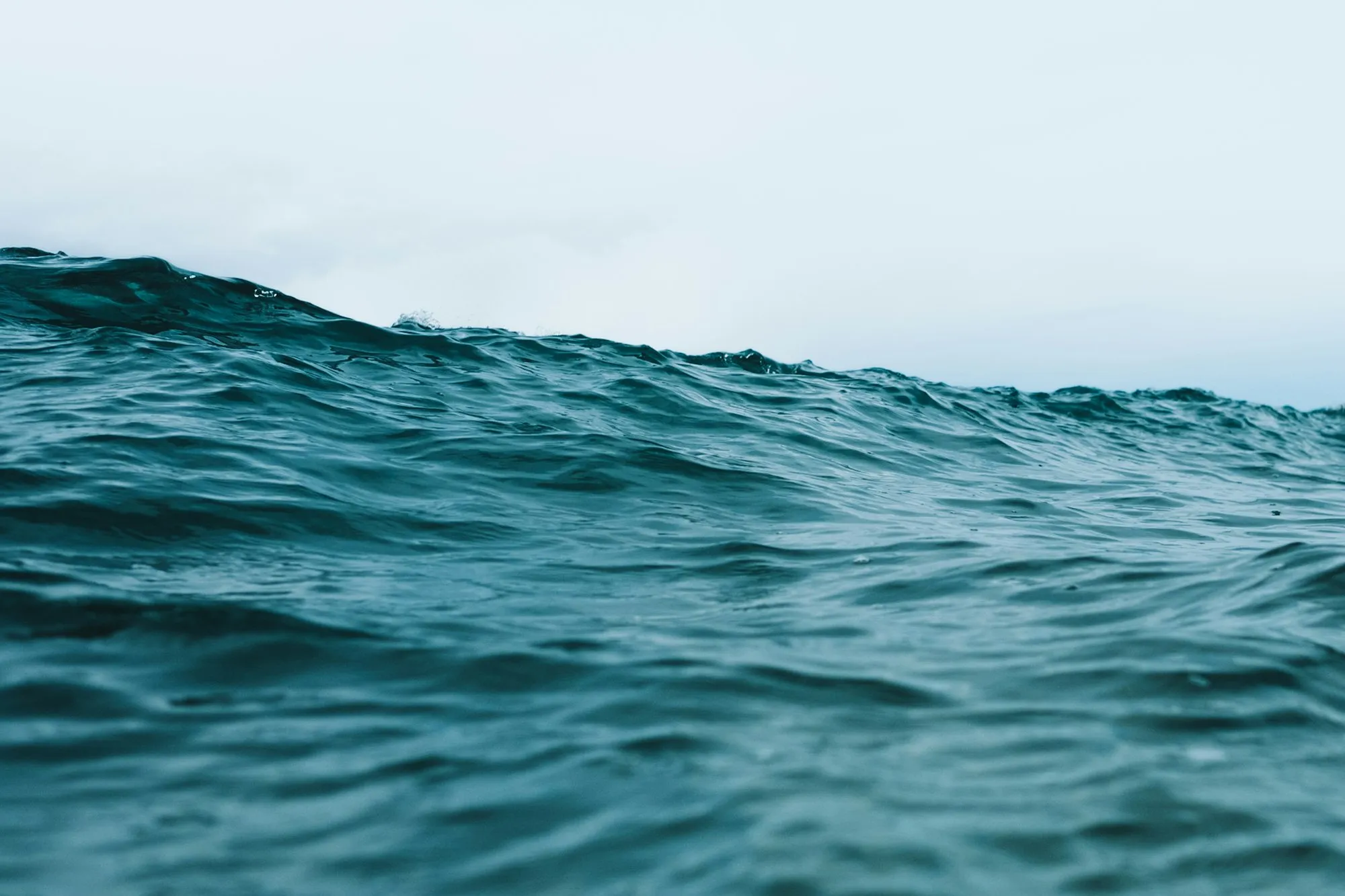
Where is Magic Bay, and what kind of wave is it?
Magic Bay is the main wave at Imsouane, a village set in Imsouane Bay on Morocco’s Atlantic coast, in the Souss-Massa region. It is roughly two hours north of Agadir by road, about 90 minutes south of Essaouira, and 3.5-4 hours from Marrakech. The nearest airport is Agadir Al Massira (AGA).
It is a right-hand point break. Instead of breaking towards the beach all at once, the wave stands up near the headland at the top of the bay and peels along the shoreline in one direction, so a single wave can be ridden for a long way.
Why does the bay produce such a long wave?
Two things, working together.
The first is shape. The headland forces incoming swell to bend around it, and swell that refracts around a point arrives at an angle to the shoreline. A wave meeting the shore at an angle breaks progressively along it rather than all at once — that is the whole mechanism behind any point break.
The second is the bottom. Magic Bay breaks over sand for much of its length, not reef. Sand gives the swell a gentler transition from deep to shallow water, which is a large part of why the wave is so forgiving: the take-off is rarely vertical, and a wipeout usually just means sand. The trade-off is that a sand point is never perfectly mechanical. Sandbanks move over time, so the shape shifts a little across seasons and after big swells.
What swell does Magic Bay need?
North-west Atlantic swell, which is most consistent from September through April. December to February is the biggest and busiest stretch of the year; May to August is the smallest.
Because that swell has to wrap into the bay, the wave inside is usually noticeably smaller than the open coast on the same day. This filtering is exactly the point — it strips off size and raw power and delivers something long and organised instead. It also means the bay generally wants a decent, longer-period groundswell to properly switch on. Short-period local windswell tends not to bend in as cleanly.
When is it cleanest during the day?
Mornings, usually. The wind is typically lightest early and the onshore builds later, normally after midday, putting texture on the water and softening the wave’s shape. If you only have one session in you, take the early one.
How does the tide change it?
Morocco’s Atlantic coast has a real tidal range, so the same sandbank can feel like two different waves within a day. As a general rule on a sand point:
- Lower tide — less water over the bank, so the wave stands up more, sections gain definition and it runs faster.
- Higher tide — more water over the bank, so it gets fuller, slower and softer. Usually friendlier for a first-timer, less rewarding if you want a face to work with.
On small days you generally want whichever tide gives the wave more shape; on bigger days the extra water takes some of the edge off. Plan around the tide rather than the clock.
What are the sections of the ride?
Long points are rarely one continuous wall, and Magic Bay is easiest to understand in parts:
- The top of the point — where waves first stand up. Steepest take-off, shortest walk back, and normally where the more experienced surfers sit.
- The middle — the long, tapering wall the bay is known for. Slow and forgiving, and the best place to learn to trim, generate speed and link turns.
- The inside — waves commonly reform closer to shore over shallower sand. Whitewater, waist-deep water and a soft bottom; this is where most lessons happen.
Magic Bay or Cathedral Point?
| Magic Bay | Cathedral Point | |
|---|---|---|
| Position | Inside the bay, sheltered by the headland | The exposed side of the headland |
| Bottom | Sand for much of its length | Rock |
| Character | Long right-hand point, peels and tapers | More powerful and more demanding |
| Size on a given day | Smaller — the swell has to wrap in | Takes the swell more directly |
| Suits | Beginners through to experienced surfers | Experienced surfers comfortable over rock |
When should I come?
| Period | Swell | Water temp | Wetsuit | Best for |
|---|---|---|---|---|
| Sept-Nov | NW swell returning and consistent | Around 20-23C, easing down | 3/2 | First proper point-break sessions |
| Dec-Feb | Biggest and most consistent; busiest | Around 17-20C | 3/2 | The longest, most powerful rides |
| Mar-Apr | Still consistent, gradually easing | Around 17-20C, warming | 3/2 | A balance of size and quieter water |
| May-Aug | Smallest of the year | Around 20-23C | 3/2 or lighter | Learning to surf |
Who does this wave suit?
Almost everyone, which is unusual for a wave this long.
- Complete beginners — the inside reforms over sand, in standing depth, with nothing hard underneath.
- Improvers — close to an ideal wave for the step most people get stuck on: leaving the whitewater and riding an unbroken face along the line of the wave. The wall is long and patient enough that you can make a mistake and still be riding.
- Experienced surfers — it is not a hollow, heavy wave and does not pretend to be. It rewards speed, flow and long rail turns, and gives you far more of them per wave than most breaks.
- Longboarders and mid-length riders — arguably the best fit of all. Slow, sloping, sand-bottom walls are what those boards are built for.
One piece of etiquette before you paddle out: on a point, the surfer closest to the breaking part of the wave has priority. On a long right with a crowd on it, that rule is what keeps everything working.
If you would rather learn the bay alongside people who surf it daily, our daily surf lessons and week-long surf camps both include boards and wetsuits. If you already surf and only need equipment, there is board and wetsuit rental. And for the afternoons once the onshore fills in, there are other things to do — Moroccan cooking, sandboarding, surf-skate, Paradise Valley and the Agadir souk.