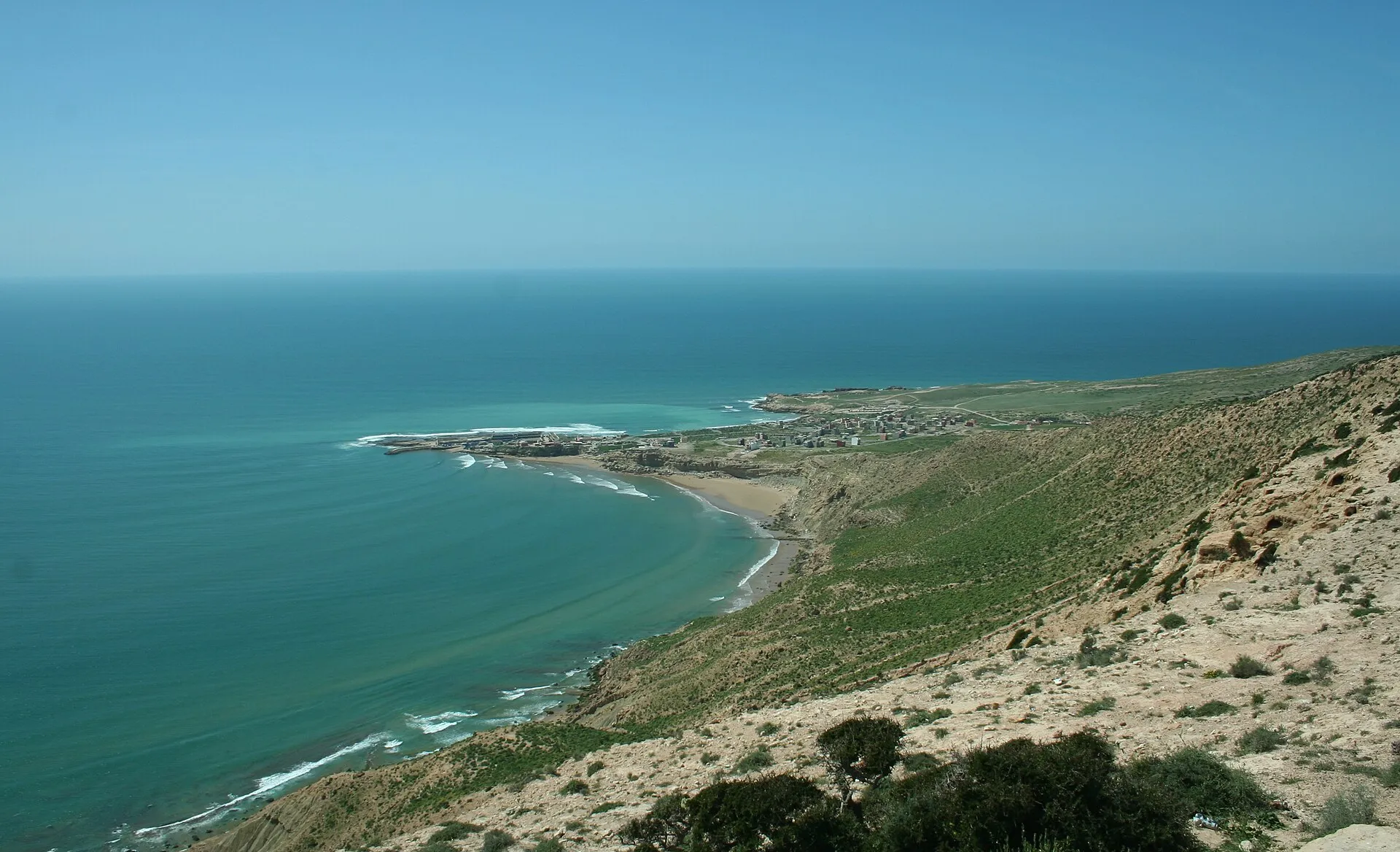
Imsouane is a small fishing village on Morocco’s Atlantic coast, tucked into a bay between Agadir and Essaouira. It is known for one thing above all: a right-hand point break that peels for so long it has earned the name Magic Bay.
Where Imsouane is
The village sits roughly two hours north of Agadir by road and about ninety minutes south of Essaouira. From Marrakech it is a longer haul, somewhere between three and a half and four hours depending on traffic through the Argan forest.
That relative isolation is part of the appeal. Imsouane never became a resort town. The harbour still works, the fishing boats still go out, and the bay in front of the village happens to produce one of the most generous waves on the continent.
How the wave works
Magic Bay is a point break, meaning the swell wraps around a headland and peels along it in one direction rather than closing out. Here it peels right, from the point towards the beach.
Two things make it unusual:
It is long. Because the bay curves gently, the wave keeps finding shallower water and keeps breaking. On the right swell, rides run for several hundred metres. Surfers regularly walk back up the beach rather than paddle.
It is soft. Most point breaks of this quality are fast and unforgiving. Magic Bay breaks over sand for much of its length and rolls rather than throws. That combination — long and gentle — is rare, and it is exactly why beginners and longboarders travel here.
The bay has two distinct personalities:
- Magic Bay (the inside) — the sheltered, mellow section. Waist to head high on an average day, forgiving, and the natural home for lessons.
- Cathedral Point — around the exposed side of the headland. It catches more swell, breaks harder and sits over rock. Confident intermediates and above only.
When to come
Morocco’s surf season is driven by north Atlantic low-pressure systems, which send swell south-east towards the coast.
| Period | What to expect |
|---|---|
| September – November | Season building. Warm water, growing swell, fewer crowds. |
| December – February | Peak power and consistency. Also the busiest months. |
| March – April | Still consistent, lighter crowds, pleasant air temperatures. |
| May – August | Smallest and mellowest. Best window for first-timers. |
Mornings are usually the cleanest surf of the day, before the afternoon onshore wind picks up and puts texture on the water.
What to wear
Water temperature sits around 17–20°C in winter and 20–23°C in summer. A 3/2 mm wetsuit covers most of the year. In high summer many people surf in a shorty or even boardshorts, and in the coldest weeks of January and February a 4/3 with a thin hood is welcome for long sessions.
Crowds and etiquette
Imsouane is no longer a secret. In peak season the bay can hold a lot of surfers, and the line-up mixes complete beginners with people who have surfed here for twenty years.
The etiquette is the same as anywhere: the surfer closest to the peak has priority, do not drop in, do not paddle straight through the peak, and give way to people already riding. On a wave this long, a drop-in ruins a ride that might have lasted a minute.
Who Imsouane suits
If you are learning, this is one of the best places in Morocco to do it — the wave gives you time, which is the thing beginners need most.
If you are an improving intermediate, the long wall is a gift. You get to link turns and actually practise rather than surviving two seconds and paddling back out.
If you are advanced and want power, Imsouane on a small day will bore you. Come on a solid swell, surf the point, or head south towards the Taghazout reefs.
We run surf lessons and week-long surf camps in Imsouane year-round, and we rent boards and wetsuits if you would rather surf on your own schedule.