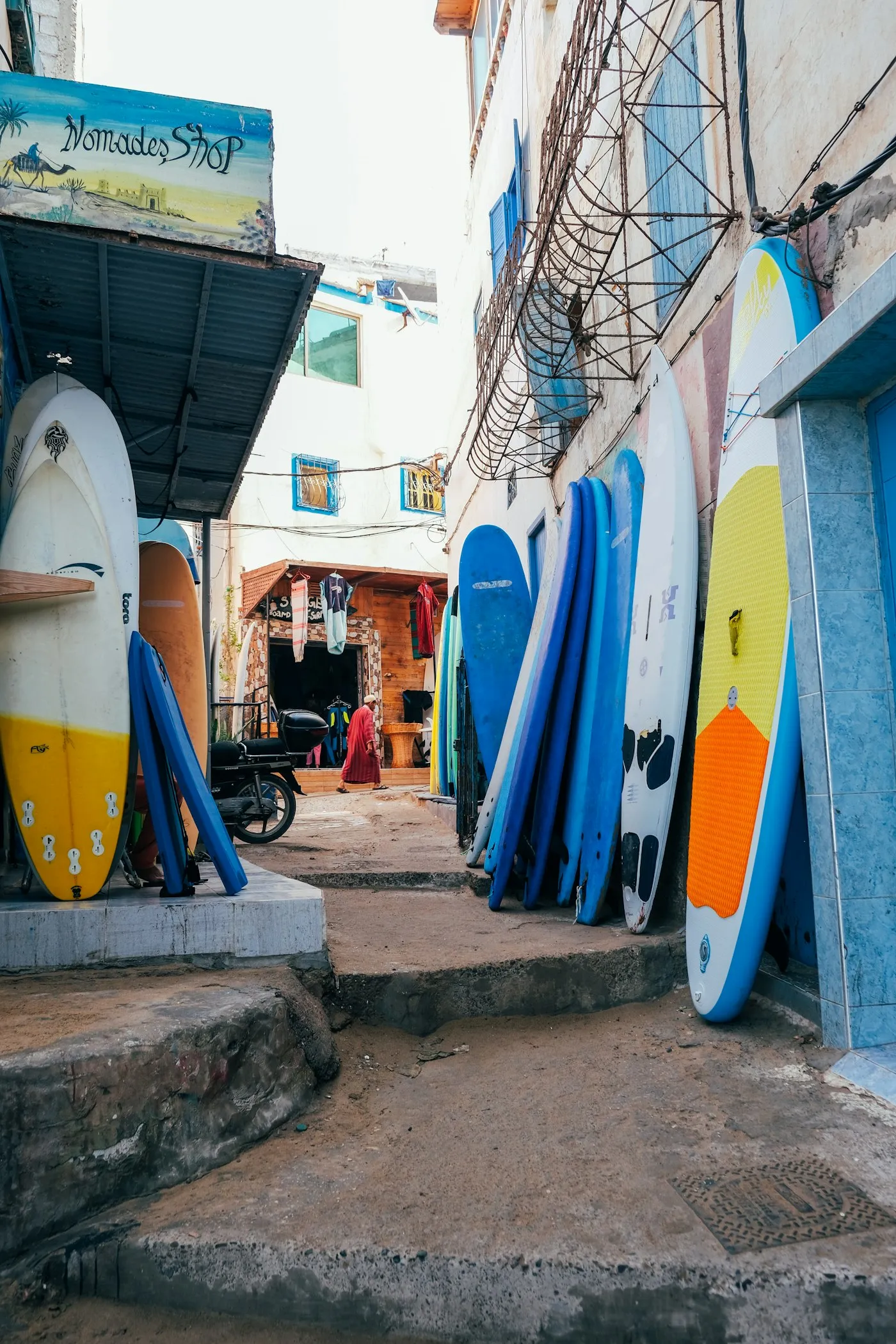
Is January a good time to surf in Morocco?
Yes, as long as you know what you are signing up for. North-west Atlantic swell reaches Morocco most consistently from September to April. December to February is the peak, with the biggest waves and the busiest line-ups, and January is right in the middle of it.
For intermediate and experienced surfers, this is the main event. For beginners, it can still work well, as long as you surf the right spot on the right day. This guide tries to be honest about both.
How big are the waves in January?
Wave size changes a lot from day to day. A strong winter storm far out in the North Atlantic can send swell that turns exposed spots well overhead. Between those pulses, the same coast can be small and gentle. Most January weeks include a mix of both.
What matters more than the forecast number is how each spot handles it. A sheltered point break like Magic Bay wraps the swell around the headland and softens it. Exposed reefs and points take the full force. That is why the same day can be fine for a beginner in one bay and serious a short walk away.
If you are travelling specifically for January, plan around a full week rather than a weekend. That gives you a better chance of catching both a solid swell and the more manageable days around it.
How cold is it in January?
The water is cooler than in summer but rarely harsh. On this stretch of coast it sits around 17-20C in winter, against about 20-23C in summer.
| January (peak season) | May to August (small season) | |
|---|---|---|
| Swell | Biggest and most consistent | Smallest |
| Water temperature | About 17-20C | About 20-23C |
| Typical wetsuit | 3/2, or 4/3 for long sessions | 3/2 |
| Crowds | Busiest time of year | Quieter |
| Best suited to | Intermediate and up; beginners on smaller days | Learning |
Most surfers are comfortable in a 3/2. If you feel the cold, or you plan to stay out for a couple of hours, a 4/3 makes a real difference. Booties are not usually needed on the sandy sections. Early mornings and evenings on land feel cool, so bring a warm layer for the walk to the beach and for sitting out on a rooftop after sunset. The coast still gets a lot of sun in winter, and the region averages around 340 days of sunshine a year.
Which spots suit which level in January?
Imsouane is a good base in winter because it has two very different waves on either side of the same headland. There are also more than fifteen spots between Imsouane and Agadir.
| Spot | Type | Bottom | Power in a January swell | Best suited to |
|---|---|---|---|---|
| Magic Bay, Imsouane | Long right-hand point, roughly 800 m | Mostly sand | Softened by the headland; grows on big days | Beginners on smaller days; all levels |
| Cathedral Point, Imsouane | Exposed side of the headland | Rock | Noticeably more powerful | Experienced surfers |
| Anchor Point, Taghazout | Right-hand point | Rock | Powerful when the swell is solid | Experienced surfers |
Magic Bay is unusually forgiving for a point break. For much of its length it peels over sand, which means softer wipeouts and long rides that give you time to practise. On the biggest January days it gets more powerful and more crowded, and first-timers are better off waiting for the swell to drop.
Cathedral Point faces the open ocean and breaks over rock. In winter it gets the full force of the swell. It is a wave for confident surfers who can judge conditions, duck-dive comfortably and get themselves out of trouble.
Further south towards Agadir there are more breaks, Anchor Point at Taghazout being the best known. Reaching them by car lets you match the spot to the swell and wind on a given day.
What time of day is best?
Mornings are usually the cleanest. The wind tends to be light early on, then an onshore breeze builds after midday and roughens the surface. In January, an early session means a chilly walk down and cold hands at first. It is still worth it, because the waves are best before the wind arrives.
Afternoons are good for resting, stretching, watching others surf, or a more casual second session if the wind stays light.
How crowded is it, and how do I deal with that?
January is in the busiest stretch of the season. The best-known points draw a lot of surfers when the swell is good. A few habits help:
- Paddle out early, before the line-up fills.
- Learn the priority rules and wait your turn on a point break.
- Surf in a small group with a coach who knows where to sit.
- Be willing to drive to another spot when one is packed.
Is January a good month for complete beginners?
It can be, with the right expectations. The swell is less predictable than in the small summer season, from May to August, which is the easiest time to learn. In January a beginner gets some excellent learning days at Magic Bay and some days that are simply too big. A coach who reads the conditions each morning makes the difference. Small groups help too: with fewer people to watch, the coach can pay attention to each surfer.
Planning a January trip
If you want guided sessions matched to the day’s conditions, see our surf lessons, from group to private coaching. Our surf weeks include a Surf Development Week for intermediates who want to chase swell up and down the coast. You can rent a 4/3 wetsuit or a board for the colder sessions, and our activities cover the flat or windy days.