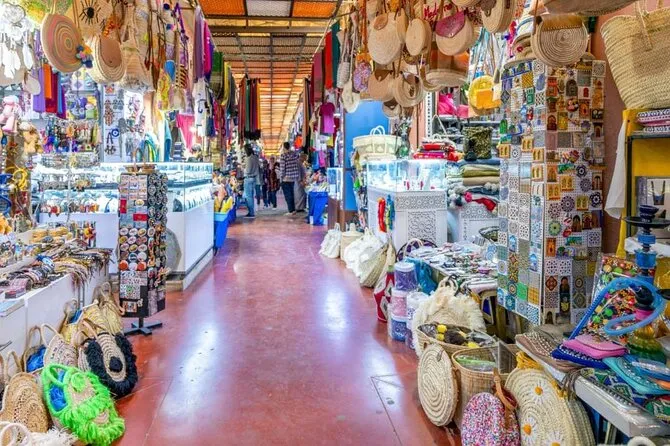
What is Souk El Had?
Souk El Had is Agadir’s biggest market, a huge walled bazaar not far from the city centre. Its name means the Sunday market, from the day it was originally held. These days it runs most of the week, but Sunday is still usually the busiest day.
Unlike the narrow medina souks of Marrakech or Fes, it’s a purpose-built enclosure with several gates and fairly orderly rows of stalls, grouped by trade. That makes it easier to find your way around, but it’s still easy to lose an hour in a single section.
It’s a working market as much as a tourist stop. Families from Agadir do their weekly shopping here, so you’ll see as many crates of tomatoes and sacks of grain as you will souvenirs.
What should I buy at Souk El Had?
The souk is split roughly into food, crafts and household sections. Here’s what’s worth looking for:
| Item | Where it comes from | Bargaining expected? | Tip |
|---|---|---|---|
| Argan oil | Souss region, around Agadir and Essaouira | Sometimes | Culinary argan oil is toasted and nutty; cosmetic oil is unroasted. Ask which one you’re buying. |
| Amlou | Souss region | Rarely | A spread made from argan oil, almonds and honey. Great on fresh bread. |
| Spices and herbs | Across Morocco | Rarely, usually sold by weight | Ras el hanout, cumin and dried mint for tea all travel well. |
| Dates, olives, dried fruit | Across Morocco | Rarely | Ask to taste first; stallholders usually expect you to. |
| Babouches and leather goods | Moroccan workshops | Yes | Check the stitching and the sole before you start negotiating. |
| Ceramics and tagine pots | Moroccan workshops | Yes | Decorative tagines aren’t always made for cooking, so ask. |
| Carpets and textiles | Amazigh and Moroccan weavers | Yes, firmly | Take your time; nobody expects a carpet deal to be quick. |
If you only have an hour, head for the spice and dried-fruit rows, then the craft section. That’s where most of the colour is.
How do I bargain at Souk El Had?
Bargaining is part of the conversation here, not a fight. A few habits help:
- Know what’s fixed. Fresh produce, spices sold by weight and everyday goods usually have fixed prices. Haggling is for crafts, leather, ceramics and carpets.
- Look around before you ask. Check a few stalls selling similar items so you get a sense of quality and what people are asking.
- Start well below the first price, and stay friendly. The first figure is an opening offer. Meet somewhere in the middle and keep things light.
- Only make an offer you’re happy to pay. If the seller accepts, walking away is considered bad form.
- Walking away is fine before you’ve agreed. A polite thank-you and moving on will sometimes bring a better offer.
- Buying several things helps. You’ll usually get a better deal buying a few items from one stall than one item each from several.
A few words of French or Darija go a long way. Moroccan Arabic, Tashelhit (the local Amazigh language) and French are all widely spoken in Agadir, and many stallholders get by in English too.
When should I visit?
Mornings are calmer and cooler, and it’s when the produce is freshest. Sunday is the liveliest and most crowded day. The souk is usually closed on Mondays, and hours can shift around religious holidays, so check before you go.
Bring cash in dirhams, preferably small notes. Most stalls don’t take cards. As in any busy market, keep your phone and wallet in a front pocket.
How do I get to Souk El Had from Imsouane?
Imsouane is roughly 2 hours north of Agadir by road. The route follows the Atlantic coast south through Tamraght and Taghazout before reaching the city. Most people make it a full day out.
| Option | Travel time from Imsouane | Relative cost | Flexibility | Good to know |
|---|---|---|---|---|
| Bus | Usually longer than 2 hours, with stops | Lowest | Low | Services from Imsouane are limited, so check times locally. |
| Shared grand taxi | Around 2 hours, often with a change of taxi | Moderate | Medium | Taxis leave when full. Agree the fare before you set off. |
| Private transfer or hired car | About 2 hours | Highest | High | Lets you stop at Taghazout or Paradise Valley on the way. |
The price of a taxi or transfer varies with the season, your luggage and the time of day. Always confirm the fare before setting off.
Can I combine the souk with surfing?
Yes, and the timing works out well. Here the wind is usually cleanest in the morning and onshore after midday. A flat or windy day is the obvious one to give over to the souk.
On the way you’ll pass some of the more than fifteen surf spots between Imsouane and Agadir, including Anchor Point at Taghazout. Back in Imsouane, Magic Bay’s long, forgiving right-hander will be waiting for the next morning.
Planning your trip with us
A trip to the Agadir souk is one of the activities we run alongside surfing, together with Moroccan cooking, sandboarding and Paradise Valley. If you’d like a full week with surfing and days out, take a look at our surf weeks. Or book lessons or rental day by day. We confirm details like timings and transport directly when you book, so just get in touch through the contact page.