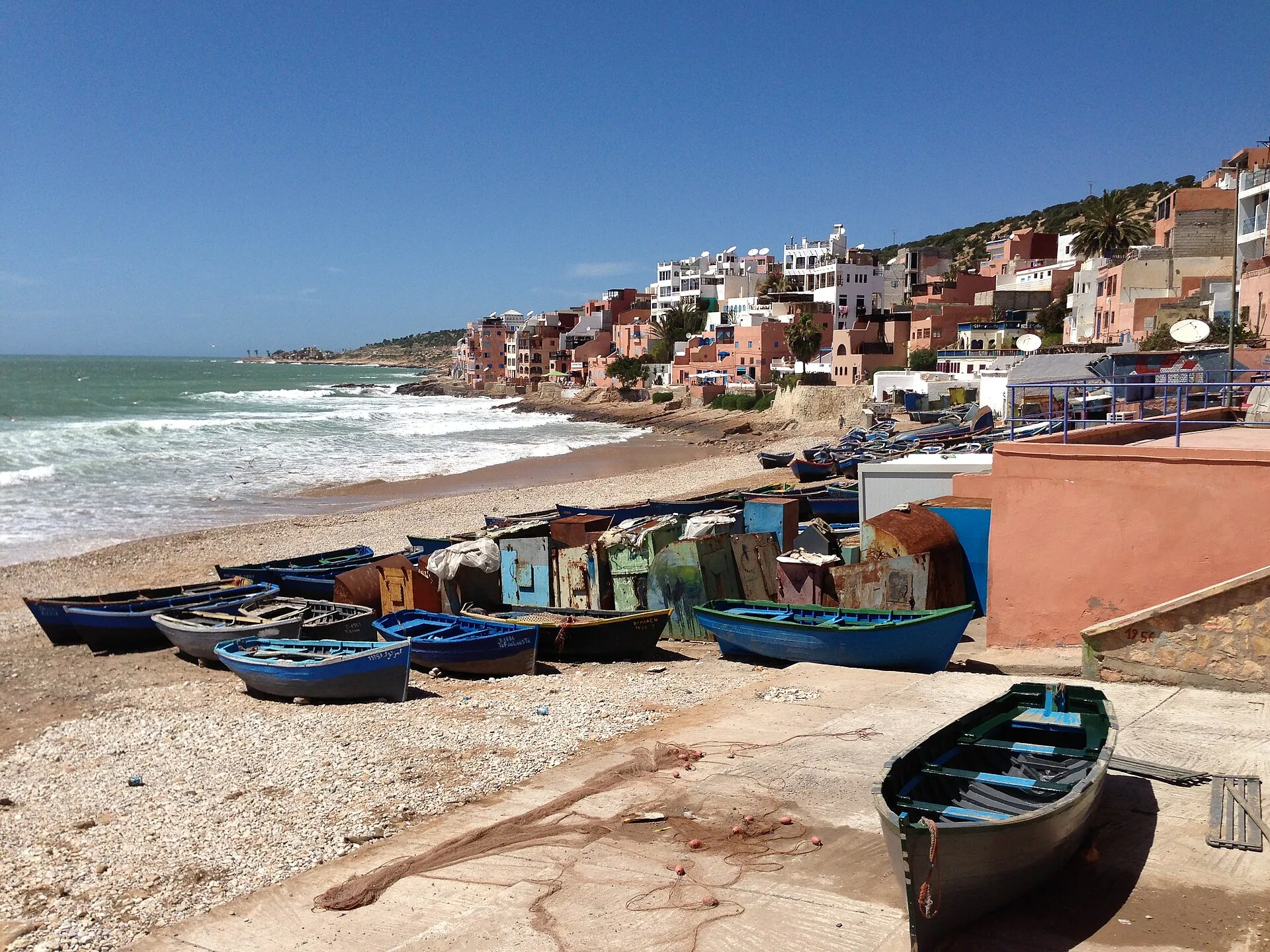
What is surfing in Imsouane like in summer?
From May to August, Imsouane has its smallest and most predictable waves of the year. The heavy north-west Atlantic swells that drive the winter season mostly fade away. What arrives instead is usually a gentler, smaller swell that wraps into Magic Bay and peels slowly along the point.
This is a different experience from winter. You’ll find fewer heavy sets, softer waves and plenty of time to practise. For anyone paddling out for the first time, those are exactly the conditions you want.
How big are the waves in summer?
At Magic Bay, summer waves are often around knee to waist high. Sizes vary: some days are close to flat, and now and then a short pulse of swell brings something a little bigger. Nobody can promise a particular size for a particular week, but small and manageable is the general pattern.
Here is how summer compares with the rest of the year:
| May–August (summer) | September–April | December–February | |
|---|---|---|---|
| Swell consistency | Lowest | Most consistent | Most consistent |
| Typical wave size | Small | Moderate to large | Biggest of the year |
| Water temperature | About 20–23°C | Cooling towards 17–20°C | About 17–20°C |
| Best suited to | First-timers, kids, beginners | Beginners to advanced | Intermediate and experienced |
| Crowd level | Varies | Varies | Busiest |
Why is summer ideal for first-timers?
Magic Bay is a long right-hand point break, roughly 800 metres, that peels over sand for much of its length. Point breaks give you a wave that breaks in a predictable line rather than closing out all at once. A sandy bottom is far more forgiving than rock when you fall.
In summer you get both of those things together with small swell. That means:
- Slower, softer waves that give you time to pop up.
- Easier paddling, with fewer heavy sets to push through.
- More waves per session, so you get more practice.
- Less fear, which matters more than most beginners expect.
Cathedral Point, on the exposed side of the headland, is more powerful and breaks over rock. It belongs to experienced surfers on bigger days, and in summer beginners have no reason to go near it.
How long are the rides on small summer days?
Magic Bay can produce very long rides when the swell is solid. On small summer days the wave usually has less energy, so rides are shorter and tend to break closer to the inside of the bay. For a beginner that hardly matters: a clean ride of a few seconds is plenty for learning to stand, trim and steer.
What time of day should I surf?
Mornings are usually the cleanest. The surface tends to be smooth early on, and onshore wind builds after midday and adds chop. Small waves are hit harder by wind than big ones, so in summer it pays to get in early.
A typical summer day might look like this:
| Time of day | Usual conditions | Good for |
|---|---|---|
| Early to mid-morning | Cleanest, lightest wind | Lessons and main session |
| Midday | Wind starting to build | Rest, lunch, shade |
| Afternoon | Onshore, choppier | Activities, surf-skate, a second session if it holds |
| Evening | Wind often easing | Sunset on the beach or a rooftop |
What should I wear in the water?
Summer water temperature is usually around 20–23°C. A 3/2 wetsuit covers most of the year in Imsouane and works well in summer, especially for long morning sessions. Some surfers wear less on the warmest days, but beginners spend a lot of time sitting and falling, so a wetsuit also helps protect against rash and scrapes.
Outside the water there’s plenty of sun: the area gets around 340 days of sunshine a year. Bring strong sunscreen, a hat and water, because the reflection off the sea makes the sun stronger than it feels.
Is summer right for experienced surfers?
Only if your expectations match the conditions. Small summer waves suit longboarding, fine-tuning your technique and video-based coaching more than powerful surfing. If you’re after size, power and the busiest line-ups, come between September and April, and especially from December to February.
The coast between Imsouane and Agadir has more than fifteen surf spots, including Anchor Point at Taghazout. On a small summer swell, many of them will be small too, so check the forecast before you plan around them.
How do I make the most of a summer surf trip?
- Surf early. Morning sessions are usually the best of the day.
- Take lessons rather than going it alone. Coaching speeds up learning a lot, and small groups mean more feedback.
- Stay a full week. Swell varies, and a longer stay gives you more good days.
- Plan dry-land days. On flat or windy afternoons there’s cooking, sandboarding, surf-skate and trips to Paradise Valley.
Details such as exact availability for your dates are confirmed directly when you book through the contact page.
If you’re planning a first summer in the water, you can read about group, semi-private, private and kids sessions on our lessons page, or see how a full week fits together on surf weeks. Boards from soft-tops upwards and wetsuits are listed under rental, and ideas for afternoons out of the water are on activities.