Where is Tamri?
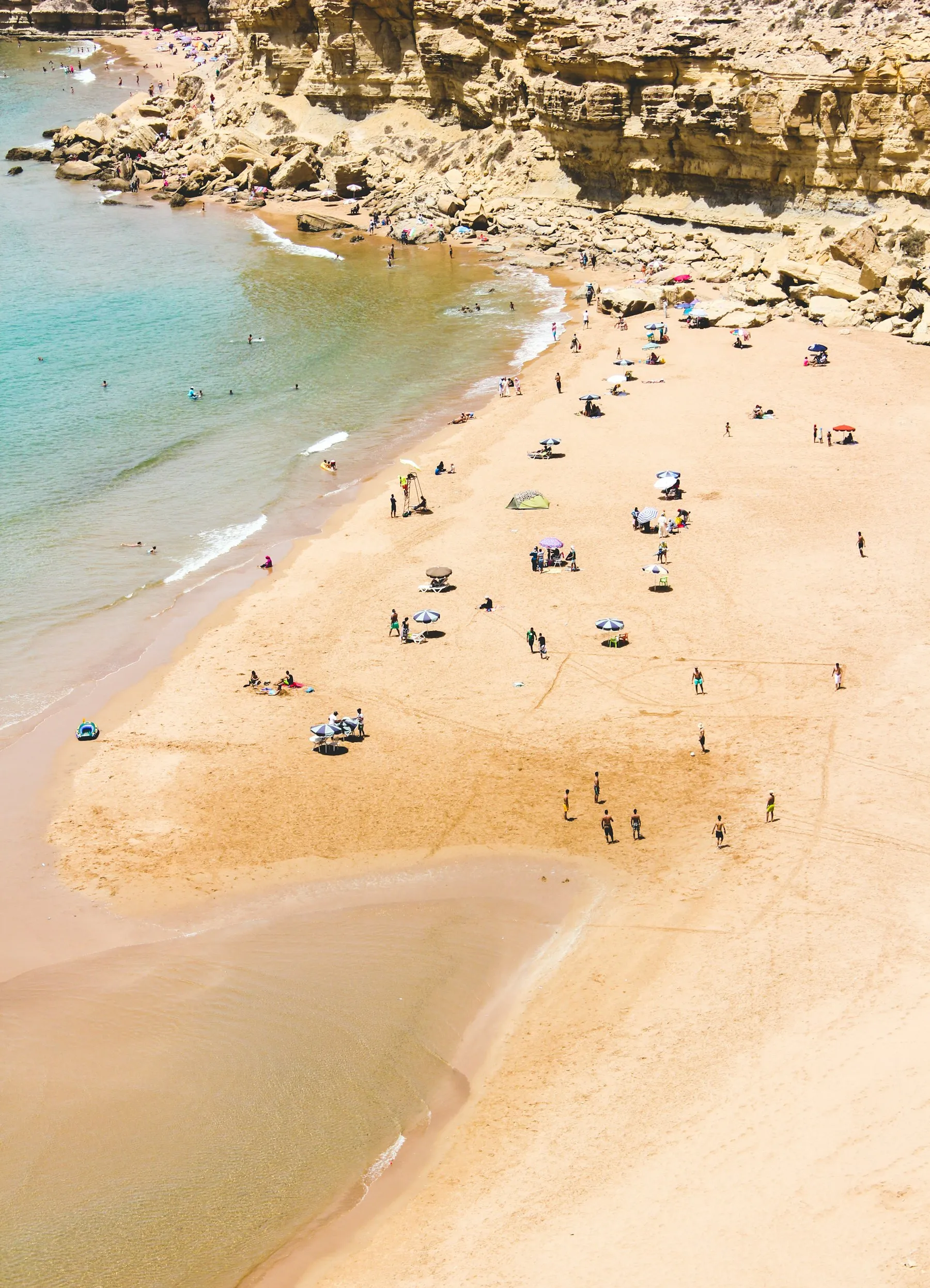
Tamri is a small village on Morocco’s Atlantic coast, north of Taghazout and just past the headland of Cap Ghir. The surf spot is the long, open beach near the mouth of the Tamri river, where the coast road runs between banana plantations and the sea.
It sits between Imsouane and Taghazout, so it’s one of the more than fifteen surf spots on the stretch between Imsouane and Agadir. From Imsouane it is usually under an hour’s drive south.
Why does Tamri have waves when other spots are flat?
Most of the well-known waves around Taghazout and Imsouane are right-hand point breaks tucked in behind headlands. That shelter is what makes them clean and long, but it also means they need a decent swell before they start breaking.
Tamri has no such protection. The beach faces roughly west and takes north-west Atlantic swell head on. In practice, that means:
- On small days, Tamri often has rideable waves while the points are close to flat.
- On medium days, it can be the most powerful wave in the area.
- On big days, it gets overloaded and usually stops being surfable.
That’s why Tamri is a spot surfers check when the points are too small, not usually where they go first.
When does Tamri work best?
Tamri is a beach break, so the waves break over sandbanks that shift with storms, river flow and the seasons. The quality changes from week to week, but the general pattern is reliable enough to plan around.
| Condition | What Tamri usually does | Verdict |
|---|---|---|
| Small swell (knee to waist high) | Peaky, playful waves, often the best option nearby | Good for intermediates |
| Moderate swell (waist to head high) | Hollow, powerful A-frames on good banks | Tamri at its best |
| Large swell (well overhead) | Close-outs, heavy shore break, strong rips | Usually not worth it |
| Light easterly or no wind | Clean, groomed faces | Ideal |
| Onshore wind (typically after midday) | Choppy, disorganised, often blown out | Poor |
| Mid tide | Generally the most consistent shape | Usually best |
| Low tide on a solid swell | Faster, more prone to closing out | Hit and miss |
The best season matches the rest of the coast. North-west swell is most consistent from September to April. The shoulder months, when swells are moderate rather than huge, often suit Tamri better than the depths of winter.
When does Tamri close out?
A close-out is when a whole section of wave breaks at once instead of peeling along the face. There’s no open shoulder to ride, so you either straighten out or get caught under it.
Tamri tends to close out when:
- The swell is too big. From December to February, the biggest and busiest months on this coast, Tamri is often simply too large.
- The sandbanks are flat. After big storms the sand can be spread evenly, and the waves break in long walls with no peak.
- The tide is very low on a solid swell. Shallow banks make waves break harder and faster.
- The wind is onshore. Messy water makes the line-up harder to read and the sets less predictable.
If you’re standing on the beach watching long lines break from end to end, believe what you see. It won’t get better once you’re out there.
Who should paddle out at Tamri?
Tamri suits surfers who are already comfortable in open-ocean beach break conditions. Before you paddle out, ask yourself whether you can:
- duck-dive or turtle-roll reliably through a solid shore break
- spot a rip current from the beach and use it, or get out of it
- pick a peak and position yourself without a channel to guide you
- get yourself out of trouble without help
If the answer is no, it’s better to surf a more forgiving wave and come back to Tamri later.
| Tamri | Magic Bay, Imsouane | Anchor Point, Taghazout | |
|---|---|---|---|
| Type | Exposed beach break | Long right-hand point break | Right-hand point break |
| Bottom | Sand | Mostly sand | Rock |
| Swell needed | Works on small swell | Needs more swell to fire | Needs a solid swell |
| Main hazard | Rips, shore break, close-outs | Crowds on good days | Rocks, power |
| Best for | Intermediate to advanced | Beginners to advanced | Advanced |
What should I watch out for at Tamri?
The main risk at Tamri is currents. A big, open beach with shifting banks and a river mouth often has strong rips, especially as the swell builds. Watch for a few full set cycles before you go in, look for the darker, calmer channels where water drains back out, and don’t surf alone if you’re unsure.
The shore break can also be heavy, especially at higher tides. Facilities on the beach are limited, so bring water, sun protection and everything you need for the session.
Water temperature matches the rest of the coast: about 17-20C in winter and 20-23C in summer. A 3/2 wetsuit is enough for most of the year.
How does Tamri fit into a surf trip from Imsouane?
For most surfers, Tamri works as a backup spot. On a small day when Magic Bay is barely breaking, a morning drive south can find more size. On a big winter day, the sheltered points are usually the better call, and Tamri is best left alone.
If you’re still building your skills, spend your time on a wave that lets you practise. Our lessons in Imsouane run in groups of up to five, with ISA-certified coaches. If you already surf and want to learn to read spots like Tamri yourself, take a look at our surf weeks, including the Surf Development Week with daily video analysis and sessions on tides and reading the line-up. Boards and wetsuits are available through rental, and for flat days there are activities on and off the coast.